Best Chemistry Flashcards for 5 Core Topics

Chemistry gets easier to test when each card asks you to explain a pattern, not just name a term. These chemistry flashcards cover five core topics, with examples for school courses, college classes, and exam prep. Quizessa can turn your course files into MCQs, flashcards, and answer explanations, then adapt later practice to your performance.
1. Periodic Table and Element Properties: Connect symbols, trends, and patterns
Start with cards that connect an element’s symbol to its place in the table. A prompt might ask, “What does the symbol Na stand for?” Another could ask you to identify how many protons an atom with atomic number 11 has. These quick checks build a base for harder questions about ions and bonding.
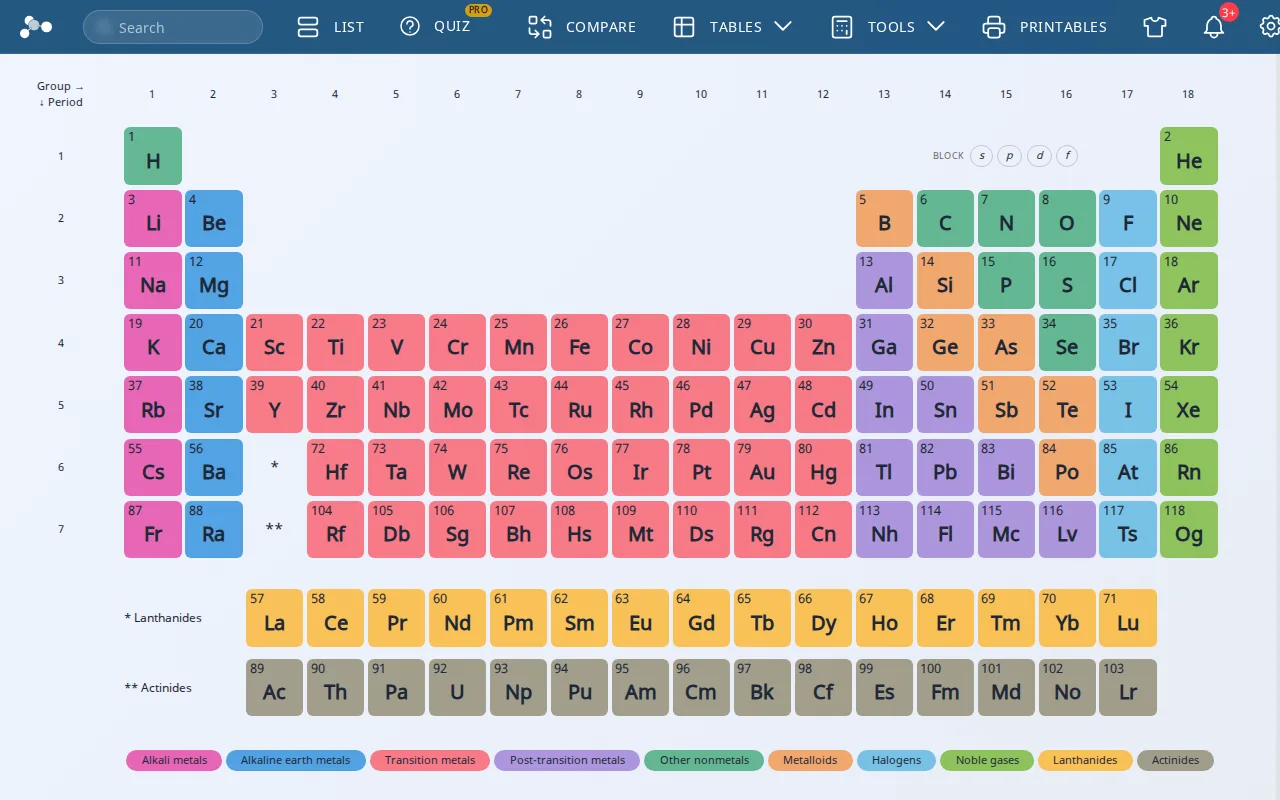
Then move past names and symbols. Ask what an element’s group can tell you about its outer electrons, or how atomic radius changes as you move across a period. A useful card makes you state the pattern and explain what it means. For example, link an element’s outer electrons to the ion it may form.
An introductory deck may hold cards on atomic structure, isotopes, and periodic trends. For a high school or college course, match the terms and detail to your teacher’s notes or course guide.
Make a small printable deck if you want to sketch the table or mark trends by hand. Leave room on each card for a short reason, not only a one-word answer. When a symbol or pattern keeps slipping, mark it for another review rather than copying the whole chapter onto a card.
For a simple way to turn class notes into focused prompts, see how to turn notes into flashcards. Keep each prompt narrow enough to answer without peeking.
2. Chemical Bonding and Molecular Shape: Practice structure and properties together
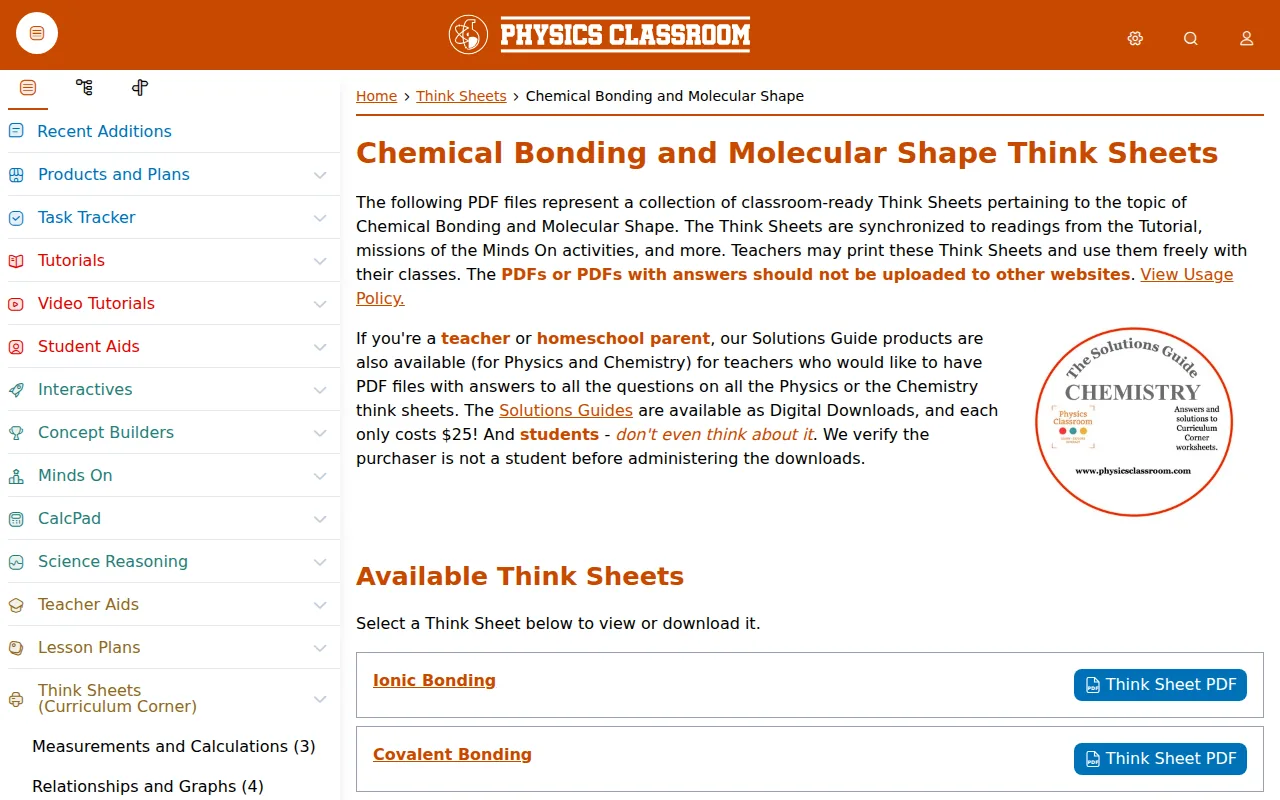
Bonding cards work best when they ask what electrons do and what follows from that behavior. For ionic bonding, practice the transfer of electrons and the attraction between oppositely charged ions. For covalent bonding, ask what the shared pair means. For metallic bonding, connect mobile, delocalized electrons with electrical conduction.
Then add diagrams. A card can show a Lewis structure on the front and ask you to name the likely molecular shape on the back. For water, for example, your answer should account for two bonding pairs and two lone pairs around oxygen. A diagram lets you practice seeing the arrangement, not just recalling a shape name.
Next, connect shape to polarity. A molecule can have polar bonds yet be nonpolar overall if its shape lets the bond dipoles cancel. CO₂ is a useful example: its bonds are polar, but its linear shape is symmetrical. Ask yourself to explain both parts. That is stronger practice than memorizing “CO₂ is nonpolar” by itself.
In a solid ionic compound, ions cannot move freely. Ions are mobile when an ionic compound is molten. For printable cards, draw a rough model on the front and write the reasoning on the back. For digital review, add a clear image of the structure if your card app supports it.
When you miss a shape or polarity question, check the Lewis structure first. The error may be in counting electron domains, not in remembering the final geometry.
3. Stoichiometry and Mole Conversions: Recall the setup, then solve
Stoichiometry cards should make you do a small calculation, not just define the word. Put a short problem on the front and leave enough space to show the setup. On the back, include the balanced equation, the mole ratio, and the units that cancel. This makes it easier to spot whether you used the wrong coefficient or skipped a conversion.
A useful sequence is grams to moles, then mole ratio, then the requested unit. For a question about product mass, the back should show where molar mass enters the calculation. For particle counts, make the conversion from moles to particles visible. If a problem gives gas volume or solution concentration, make sure the card names the conditions or values needed for that method.
Limiting-reactant cards need a comparison, not a memorized definition alone. Ask which reactant runs out first, then solve the problem using each reactant’s amount and the balanced equation. The reactant that yields less product sets the theoretical yield. Add a second card asking what remains in excess after the reaction.
Printable decks work well for calculations because you can solve on scrap paper before flipping the card. Digital cards can keep a missed question in your review mix. Either way, check units at each step. If they do not cancel to the unit the question asks for, pause and reset the setup.
To space your review of these problems, see this guide to spaced repetition flashcards.
Turn your notes into a practice exam
Upload a document and Quizessa builds questions, flashcards and explanations in minutes.
Try it free4. Chemical Reactions and Equation Balancing: Recognize patterns and conserve atoms
Balancing cards should make you count atoms on both sides of an equation. Put an unbalanced equation on the front. On the back, show the coefficients and a quick atom count. The key rule is to change coefficients, not subscripts. A changed subscript would change the formula itself.
Add reaction-pattern cards once you can balance simple equations. Ask what type of reaction fits a pattern such as A + B → AB, or what products may form when an acid reacts with a base. You can also practice combustion, decomposition, and precipitation. Treat each prediction as a question to check against your course material, since the reactants and conditions affect the answer.
Cards about reaction evidence can connect classroom theory with lab work. Ask what a precipitate is, what gas formation may look like, or why a temperature change can signal energy transfer. Keep these prompts tied to the experiments you actually perform. A card about an observation should not replace lab safety instructions or your instructor’s procedure.
Try a sequence of three cards for a reaction: identify the pattern, balance the equation, then explain what the coefficients mean. That sequence checks recognition and reasoning. If you only practice naming reaction types, you may know the labels but still struggle when an exam asks you to use the equation.
5. Acids, Bases, and Equilibrium: Link definitions to changing conditions
Begin with cards that distinguish an acid, a base, and an alkali. Then practice what pH tells you: a value below 7 is acidic, 7 is neutral, and above 7 is basic. For stronger understanding, make the back explain the result rather than repeat the number alone.
For acid-base reactions, ask what neutralization produces and how to write a balanced equation for a reaction your class has covered. Include a prompt about indicators, too. The color change is useful only when you know which condition the indicator is showing.
Equilibrium cards should ask what changes when a system is disturbed. For example, ask how the direction of a shift responds when you add a reactant, then state what happens to the relative amounts of reactants and products. If your course uses equilibrium constants, separate cards can test what a large or small value indicates. Keep the conditions in the prompt clear.
Clinical chemistry students may need a different deck, with attention to measurement units and interpretation in context. Board-exam prep can include short scenarios, but make sure each answer matches the course or official study guide you’re using. A card is a prompt for recall, not a replacement for checking a source when a detail matters.
When reviewing, mix familiar pH facts with newer equilibrium questions. If you miss a question, use the topic result to decide what needs another pass.
Compare the Five Chemistry Flashcard Topics
Choose the next deck based on the kind of question that slows you down. A student who forgets symbols needs a different review session from someone who can name a reaction but cannot balance it. Use this table to pick a topic and a useful card format.
| Topic | Best card format | What to check in your answer | Good next review |
|---|---|---|---|
| Periodic table | Symbol, trend, or short explanation | Element identity and pattern | Connect outer electrons to ion formation |
| Bonding and shape | Diagram with a reasoning prompt | Electron behavior, domains, and symmetry | Explain how shape affects polarity |
| Stoichiometry | Worked problem with units | Balanced equation and mole ratio | Try a limiting-reactant problem |
| Reactions | Equation to classify and balance | Atom count and coefficients | Predict products from a course example |
| Acids and equilibrium | Definition plus changing-condition prompt | pH meaning or shift direction | Mix acid-base questions with equilibrium |
Printable cards suit sketches and hand-worked calculations. Digital cards are handy when you want to review on a phone or bring questions back after a missed answer. Quizessa supports a file-based workflow: upload your own materials to generate MCQs, flashcards, and answer explanations, then use later practice to see which topics need attention.
Pro pricing is $8.99 per month or $89.90 per year. For a deck you already have, keep the cards that match your course and edit prompts that test only loose facts.
FAQ
What should I put on chemistry flashcards?
Put one clear question on each card, then answer it from memory before you flip. Use short prompts for element symbols or definitions. For harder topics, ask for a reason, diagram, calculation, or prediction. A good card checks one idea at a time, while a small set of linked cards can build toward a larger problem.
Are printable or digital chemistry flashcards better?
Neither format is best for every task. Printable cards make it easy to draw structures and work calculations by hand. Digital cards are convenient for quick review and can help you revisit missed questions. Pick the format that makes you answer before checking. You can also use both, with paper for problem solving and a digital deck for recall.
How do I study chemistry with flashcards?
Try to answer each prompt before turning the card over. Mark the cards you miss, then return to them after a break or in a later session. Mix in a few older topics once you can handle the new ones. For calculation cards, write the units and steps, then check the setup rather than only the final number.
Can Quizessa make chemistry flashcards from a PDF?
Yes. Quizessa can use uploaded PDFs, slides, notes, and photos to create flashcards, multiple-choice practice, and answer explanations. Practice adapts to your performance, and topic mastery plus Readiness Score can help you choose what to review next. Check generated scientific details against your course source, especially when equations or notation are involved.
Conclusion
Start with the topic that causes the most missed questions, then make or generate a small set from your own course material. If you want MCQs, flashcards, and explanations in one study flow, try Quizessa with a lecture PDF and use your results to choose the next review.
Turn your notes into a practice exam
Upload a document and Quizessa builds questions, flashcards and explanations in minutes.
Try it freeRelated articles
-
Best Online Flashcard Generator Tools for Students
An online flashcard generator can turn course files into study material before you spend an evening writing cards by hand. The best fit depends on what you upload and how you want to practice. Here...
-
Best Active Recall Study Techniques: 9 Ways to Practice
Closing your notes can feel risky: what if you can’t remember anything? That’s the point of active recall. These active recall study techniques help you practice pulling answers from memory, then use...
-
Best Active Recall Flashcards: 5 Tools for Students
Active recall flashcards make you pull an answer from memory instead of rereading it. The right tool can turn your course material into focused practice, then help you return to the topics you miss...